
Loading...
Serving St. Joseph, MO and surrounding areas. (816) 558-9711
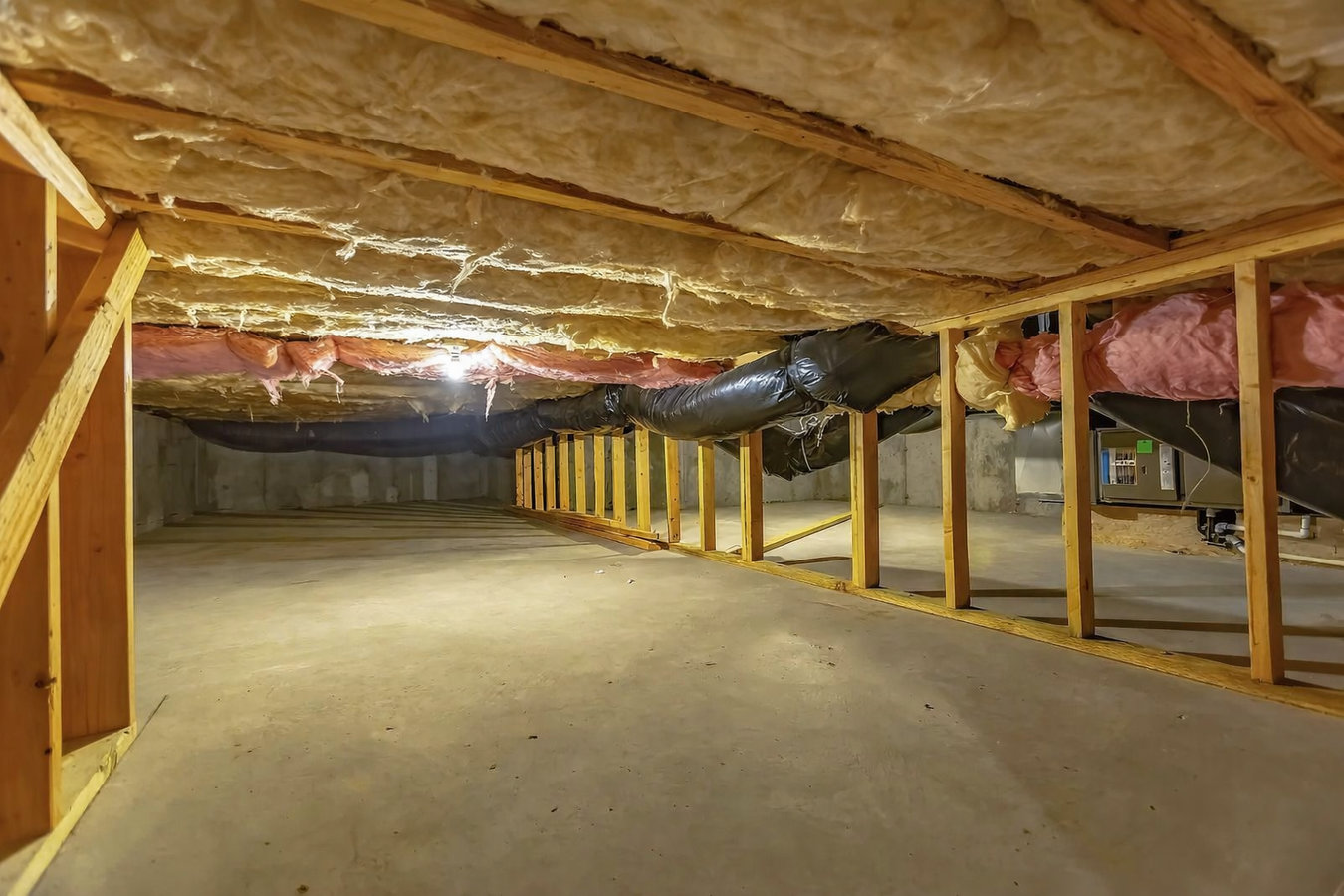
Cold floors and a furnace that never quits are signs your basement is losing heat. We seal the foundation and insulate the walls so your whole house stays warmer this winter.
Basement insulation in St. Joseph creates a barrier along your foundation walls that stops heat from escaping into the ground - most average-sized homes are completed in one to two days. Without it, your furnace works harder from November through March while the basement stays cold and damp, which pulls heat out of the living space above. Properly insulating and sealing the basement is one of the highest-impact upgrades you can make to an older Midwest home.
St. Joseph has a large share of homes built before 1980, many of which were constructed before modern insulation standards existed. If your home falls into that category, the basement is likely one of the biggest sources of heat loss in the house - and a prime candidate for this work. Pairing basement insulation with our crawl space insulation service addresses both below-grade areas in a single project for homes that have a partial crawl space alongside the basement.
The U.S. Department of Energy recommends insulating basement walls as one of the most cost-effective steps a homeowner can take to reduce heat loss - particularly in climate zones like northwest Missouri where winter temperatures regularly drop into the single digits.
If the floors on your main level feel noticeably cold in winter - especially directly above the basement - heat is escaping through the uninsulated ceiling of your basement. This is one of the most common complaints from St. Joseph homeowners in older homes, and it is a clear sign that basement insulation is missing or failing.
An uninsulated basement can account for a large share of the heat your furnace produces simply disappearing into the ground. If your gas or electric bills feel disproportionately high from November through March and you cannot explain why, the basement is one of the first places to look.
A persistent damp or musty smell in the basement - especially after rain or during spring thaw - signals that moisture is getting in and has nowhere to go. This is a warning sign that any existing insulation may already be compromised, and that new work needs to start with a moisture inspection and repair.
The rim joist is the band of wood framing that runs around the top of your foundation wall, just below the first floor. It is one of the most common places for cold air to enter a home, and in many St. Joseph homes built before 1990, it was never insulated or sealed. If you feel cold air near the top of the basement walls in winter, that is a clear signal.
We insulate basement walls from the inside using rigid foam board, spray foam, or fiberglass batts depending on your basement conditions and goals. Every job starts with a moisture inspection - because installing insulation over a damp or cracked wall is one of the fastest ways to create a mold problem. We also insulate and air-seal the rim joist, which is the most common entry point for cold air in older St. Joseph homes. Our closed-cell foam insulation is particularly well-suited for the rim joist and any area of the basement wall that has moisture exposure, since it acts as both insulation and a vapor barrier in one application.
For homeowners who want to use or finish the basement, wall insulation is the right approach - it keeps the entire space warm and livable. For those who primarily want warmer floors above, ceiling insulation (the floor assembly) may be a simpler option. We also offer crawl space insulation for homes where the below-grade area transitions from a full basement to a lower crawl space. We can assess both in the same visit and quote them together if that makes sense.
Best for homeowners who want a warm, usable basement space.
Targets the most common cold-air entry point above the foundation.
Keeps living floors warmer without conditioning the basement itself.
Seals irregular gaps and acts as a vapor barrier in moisture-prone areas.
A durable wall insulation option well-suited to unfinished basements.
Required first step for any basement with water history.
St. Joseph winters regularly drop into the single digits, and the clay-heavy soil in northwest Missouri freezes and thaws repeatedly each season. That freeze-thaw cycle puts stress on concrete foundation walls and can cause small cracks to form or widen over time, letting moisture in. Many of the city's older homes - particularly in neighborhoods like the historic Southside and along the Missouri River bluffs - were built without any basement insulation at all. Add decades of settling and shifting clay soil, and you have a basement that is actively working against your heating system every winter.
We work throughout St. Joseph, MO and regularly serve homeowners in Lansing, KS as well, where similar older housing patterns and cold-climate conditions make basement insulation one of the most common upgrade requests we receive. Evergy also offers rebates for qualifying insulation improvements - ask us whether your project qualifies before we start.
We ask a few quick questions - the size of your basement, whether you have had any water issues, and what prompted the call. We respond within 1 business day and can typically schedule an in-home visit within a few days.
A contractor walks your basement and checks the walls, ceiling, existing insulation, and the foundation condition. We look for moisture, cracks, and gaps that need to be addressed before any material goes in. The visit takes 30-60 minutes and includes a plain-language explanation of what we find.
You receive a written estimate that outlines the work, the materials, and the total cost. This is the time to ask about permits, whether the price includes prep work like crack sealing, and whether your project qualifies for an Evergy rebate. We expect questions and welcome them.
The crew seals any gaps or cracks first, then installs insulation along the walls or in the ceiling joists depending on the approach you agreed on. Most jobs finish in one to two days. Before we leave, we walk you through the finished work and leave the space clean.
Free in-home estimate. No pressure. We inspect your basement, tell you what we find, and give you a written quote you can take your time with.
(816) 558-9711We check for water infiltration and seal foundation cracks before any insulation goes in. Skipping this step is how contractors create mold problems - and how homeowners end up paying twice.
From St. Joseph neighborhoods to communities across northwest Missouri and northeast Kansas, we know the housing stock and climate conditions that shape basement insulation work in this region.
The rim joist is the most overlooked cold-air entry point in older homes. We seal it on every basement job - not as an add-on, but as a standard part of the work. Most contractors skip it.
Evergy has offered rebates for qualifying insulation improvements in the St. Joseph service area. We will tell you upfront whether your project qualifies and help you navigate the paperwork so you do not leave money on the table.
Every basement job starts with an honest assessment - not a sales pitch. We look at what is actually there, explain what we find, and give you the information you need to make a confident decision about your home.
The highest-performance option for rim joists and moisture-exposed basement walls, bonding tightly to concrete and acting as both insulation and vapor barrier.
Learn moreFor homes with a crawl space adjacent to the basement, insulating and sealing both spaces together closes every below-grade heat loss pathway at once.
Learn moreSt. Joseph winters don't wait - book your free in-home assessment now before the cold sets in and the schedule fills up.