
Loading...
Serving St. Joseph, MO and surrounding areas. (816) 558-9711
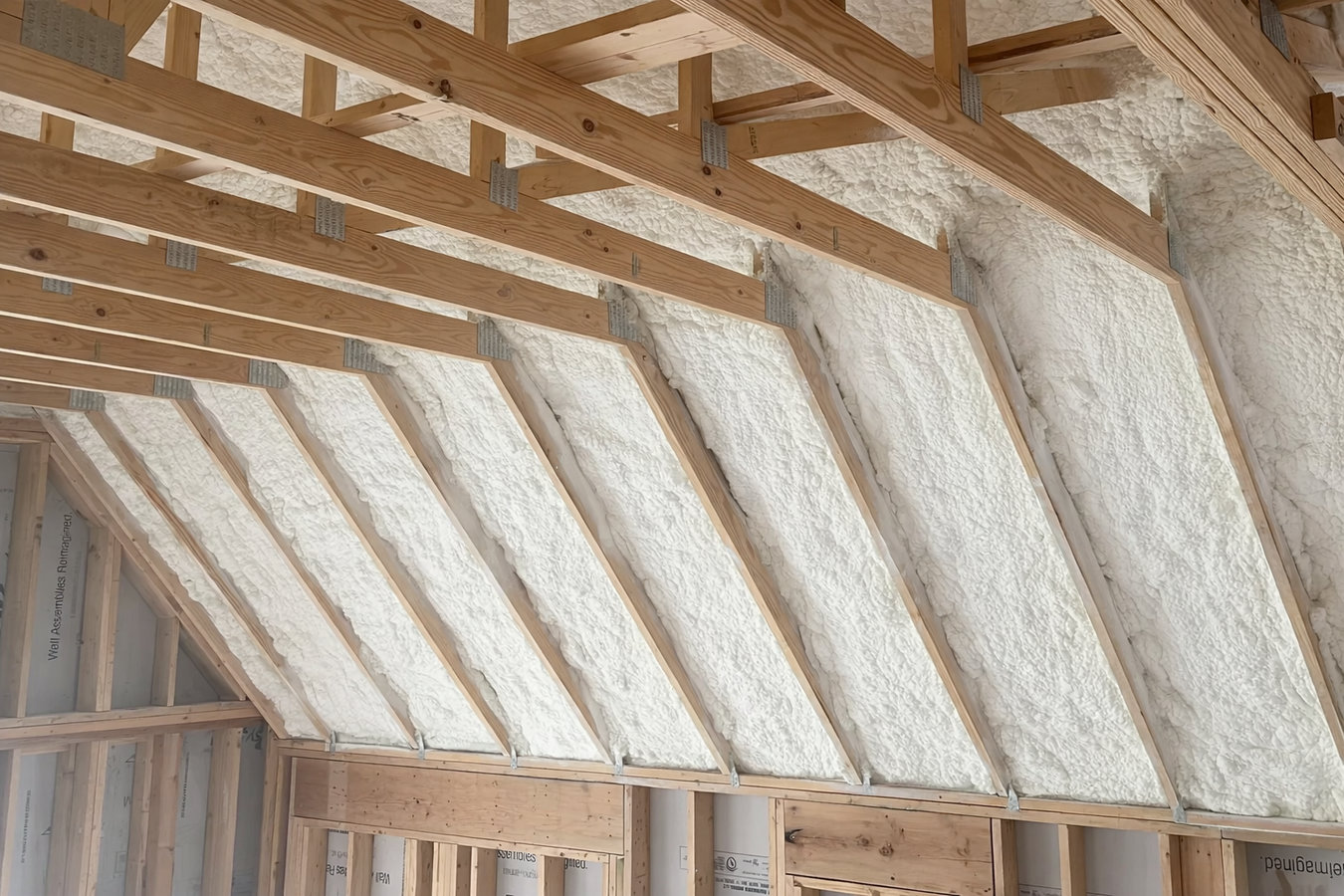
St Joseph Insulation provides closed-cell foam insulation, attic insulation, and crawl space services to homeowners in Maryville, MO - with experience in the older ranch homes and two-story houses that make up most of the city. We respond to every new inquiry within 1 business day.
Maryville winters sit in USDA Zone 5b, where the ground freezes 24 to 30 inches deep and temperatures regularly drop below zero. Most homes in town were built before 1980, and a lot of them still have whatever insulation went in during original construction. If your house runs cold, your bills are climbing, or your crawl space smells musty, the insulation is usually where the problem starts.
Maryville winters push the ground frost down 24 to 30 inches and bring temperatures that regularly drop below zero. Our closed-cell foam insulation is particularly well-suited to this climate because it seals air leaks and resists moisture at the same time - which matters in a place where clay soil keeps crawl spaces humid and winter cold is relentless.
In Maryville, where Zone 5b winters demand higher insulation levels than much of Missouri, attics in pre-1980 homes are frequently the biggest source of heat loss. Most of those homes were built with coverage that met the standards of their era but falls well short of what is needed today. Topping up or replacing attic insulation is the most direct way to cut heating costs in a northwest Missouri winter.
The flat terrain of Nodaway County drains slowly, and after heavy spring rains water sits against foundations and works its way into crawl spaces. Without insulation and air sealing at the rim joist, that cold, damp air rises directly into your first-floor rooms. Insulating the crawl space stops both the cold and the moisture from becoming your living space's problem.
Clay soil in northwest Missouri expands when wet and contracts when dry - and the moisture it releases as vapor is one of the leading causes of insulation degradation, wood rot, and mold in Maryville crawl spaces. A properly installed vapor barrier on the crawl space floor stops that ground moisture before it reaches the floor system, protecting both the insulation above it and the structural wood it sits against.
Older homes in Maryville - especially the ranch houses and two-story frames from the 1950s and 1960s - commonly have gaps where the ceiling meets the top wall plate, around recessed light fixtures, and at every pipe and wire penetration. Sealing those gaps in the attic floor before adding insulation is what makes the new material effective. Without it, cold air bypasses the insulation entirely and your bills stay high.
Maryville is the county seat of Nodaway County and sits in the flat to gently rolling farmland of northwest Missouri. The city has about 12,000 residents and is home to Northwest Missouri State University, which enrolls around 7,000 students. A large share of the housing stock was built before 1980 - the downtown and near-campus neighborhoods have a significant number of homes from the 1940s through 1960s. Maryville sits in USDA Hardiness Zone 5b, where winter temperatures regularly drop below zero and ground frost penetrates 24 to 30 inches. The freeze-thaw cycle from November through March puts repeated stress on foundations, opens gaps around pipes and framing, and is a main driver of cracked concrete and basement wall movement that lets outside air into homes.
The clay-heavy soil in Nodaway County adds a persistent moisture challenge that shows up in crawl spaces and basements year-round. Clay soil holds water after rain rather than draining it away, which keeps ground moisture elevated against foundations well into summer. That moisture feeds mold, degrades insulation batts, and softens wood framing in homes that have no vapor barrier or crawl space sealing. Spring rainfall in northwest Missouri can be significant, and the flat terrain means runoff drains slowly - basements and crawl spaces here flood or stay damp more reliably than in hillier areas. Summer hailstorms are a real risk too, and roof damage that goes unaddressed allows water into attic insulation before homeowners realize the problem exists.
We serve Maryville as part of our northwest Missouri work area, making the drive up US-71 from St. Joseph. The homes we work on most often in town are the ranch-style and two-story frame houses built between roughly 1945 and 1975 - the neighborhoods that fill in the blocks around downtown and between the university and the older residential streets. Most of those homes have full basements and original insulation that has had decades to settle, compress, or absorb moisture. The newer subdivisions on the south and east sides of town have more recent construction and different needs, but they are a smaller share of the work we see here.
Maryville is a community built around Northwest Missouri State University, and the city has a stable, long-term character because of it. Many of the homeowners we work with here have been in their houses for years, and they want the job done right the first time. Mozingo Lake, the city-owned reservoir just east of town, is a landmark nearly every resident knows - and the neighborhoods out that direction are worth mentioning because they include some newer construction that has different insulation needs than the older in-town housing.
We also cover neighboring communities. If you are in St. Joseph, MO or in Cameron, MO, we serve those areas as well.
Call or submit a request online. We ask a few basic questions - your home's age, what areas you are concerned about, and what prompted the call. We respond within 1 business day and typically schedule an on-site visit within the same week.
A technician inspects your attic, crawl space, and any other areas of concern, then gives you a written estimate. We explain what we find in plain terms - including cost options that make sense for your home and budget - before anything is scheduled. This visit usually takes 30 to 60 minutes.
Most Maryville jobs take one full day. For closed-cell foam projects, you and your household - including pets - need to stay out of the treated areas for at least 24 hours after application. The crew works in your attic and crawl space, not your main living areas, so day-to-day disruption is minimal.
Before we leave, we walk you through the completed work and answer any questions. If your project qualifies for federal energy efficiency tax credits, we provide the documentation you need. You can use your home normally as soon as the crew is finished and any re-entry period has passed.
We serve homeowners across Maryville and Nodaway County. Free estimates, written before any work starts. We respond within 1 business day.
(816) 558-9711Maryville is the county seat of Nodaway County and the largest city in northwest Missouri outside of St. Joseph. It sits in flat to gently rolling farmland, surrounded by Nodaway County's agricultural land - one of Missouri's top crop-producing counties. The city's character is shaped heavily by Northwest Missouri State University, which enrolls around 7,000 students and anchors the local economy. The university draws faculty, staff, and longtime residents who put down roots here - and the result is a city with a stable, owner-occupied neighborhood character in most parts of town, particularly away from the campus area where rental conversions are more common.
The residential neighborhoods in Maryville range from the older, tree-lined streets near downtown and the Nodaway County Courthouse - where ranch and two-story homes from the 1940s through 1960s are most common - to newer subdivisions on the south and east edges of town built in the 1990s and 2000s. Mozingo Lake, the city-owned reservoir just east of Maryville, is a well-known gathering spot for residents and draws people to the east side of town for fishing, boating, and recreation. We work on homes throughout the city - from the older in-town neighborhoods to properties near Mozingo - and we also serve homeowners in Atchison, KS and other communities in the surrounding region.
High-performance spray foam that seals and insulates in one application.
Learn moreLoose-fill insulation blown into walls, attics, and hard-to-reach spaces.
Learn moreDense, moisture-resistant closed-cell spray foam for maximum R-value.
Learn moreLightweight open-cell foam ideal for interior walls and soundproofing.
Learn moreProfessional vapor barrier installation for basements and crawl spaces.
Learn moreAdd insulation to existing walls and structures without major renovation.
Learn moreCommercial-grade insulation for offices, warehouses, and industrial buildings.
Learn moreServing these cities and communities.
St Joseph Insulation covers Maryville and Nodaway County. Call us or get a free estimate online - we respond within 1 business day.