
Loading...
Serving St. Joseph, MO and surrounding areas. (816) 558-9711
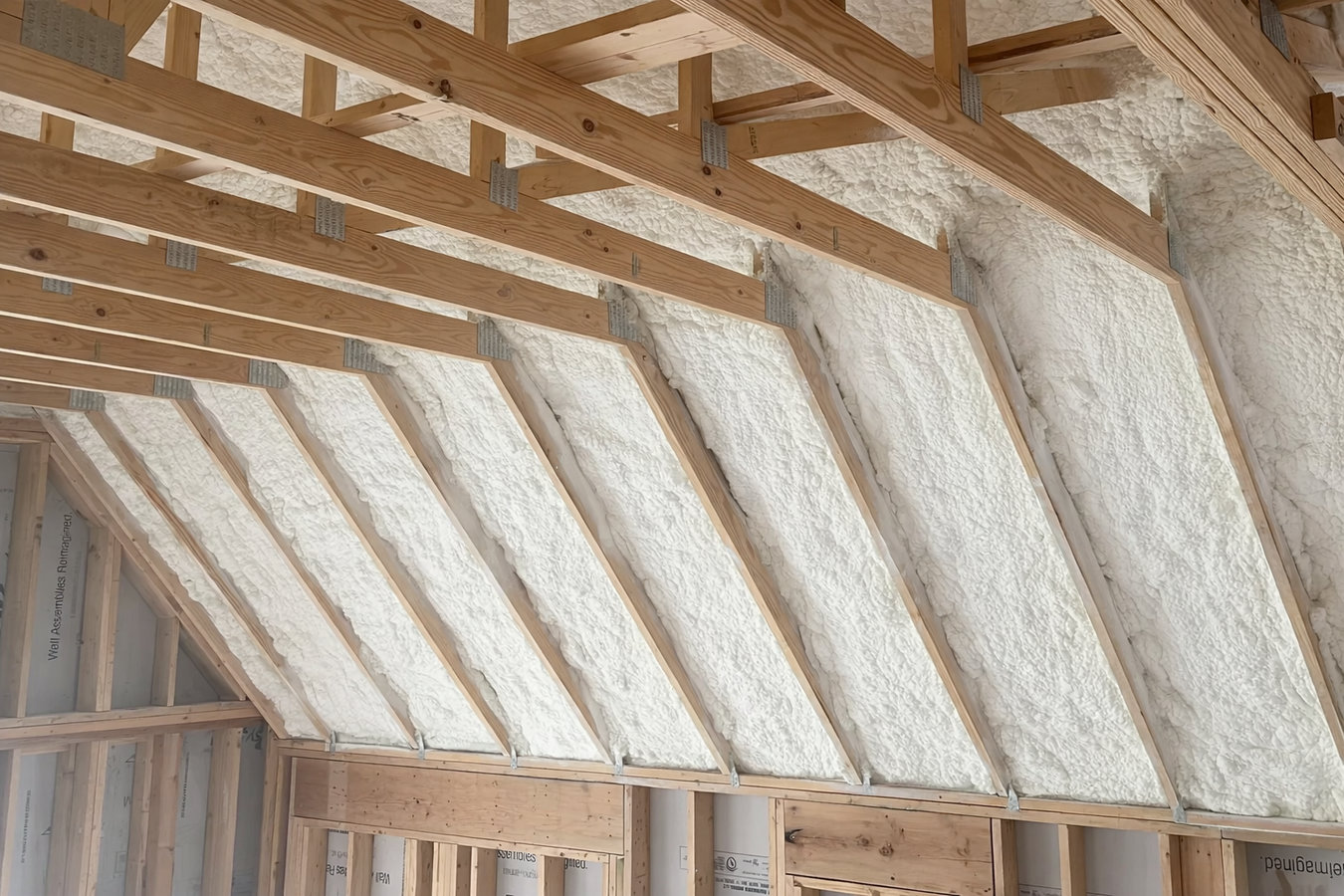
Old homes lose heat and let in moisture through gaps that batts and loose-fill can never fully close. Closed-cell foam bonds to the surface, seals the gaps, and blocks moisture - all in one application.
Closed-cell foam insulation in St. Joseph is sprayed as a liquid and expands into a firm, dense layer that bonds tightly to walls, rafters, and rim joists - most attic or crawl space jobs are completed in a single day. Unlike fiberglass batts or blown-in insulation, it does two things at once: it slows heat transfer and seals the tiny gaps and cracks where outside air sneaks in. That combination is why homes treated with closed-cell foam often feel noticeably different from the first cold night after the work is done.
Closed-cell foam also has a very low rate of moisture passing through it, which makes it particularly well-suited to the parts of your home most exposed to St. Joseph's humid summers and wet springs. For homes with crawl spaces, rim joists, or basement walls that have seen moisture issues, this material addresses insulation and vapor control at the same time. It is also a strong companion to our open-cell foam insulation service - many homes benefit from closed-cell in moisture-exposed areas and open-cell in interior walls where cost matters more than vapor resistance.
The Spray Polyurethane Foam Alliance represents the national standard for foam installation quality and safety. We follow industry best practices on every job - including confirming re-entry times with homeowners before work begins and walking through the finished coverage before we leave.
A well-insulated home should hold heat without the furnace running constantly. If your gas bill doubles or triples in the coldest months, heat is escaping somewhere - most likely through an under-insulated attic, an unsealed crawl space, or gaps around the rim joists where your floor meets the foundation.
If your upstairs bedrooms are noticeably hotter in July and colder in January than the rest of the house, the attic above them is not doing its job. St. Joseph summers push attic temperatures well above 130 degrees on hot days, and that heat radiates straight down into living spaces when insulation is thin or missing.
Hold your hand near an electrical outlet on an exterior wall on a cold day. If you feel a draft, outside air is moving through gaps in the wall cavity. This is especially common in St. Joseph homes built before the 1970s, which were constructed without the air-sealing materials used today.
A musty smell in a crawl space or basement is often a sign that humid summer air is getting in and condensing on cooler surfaces. St. Joseph's humid summers make this a common problem - particularly in homes where the crawl space has no vapor barrier or where the rim joists are uninsulated.
We apply closed-cell foam in attics, crawl spaces, rim joists, basement walls, and exterior wall cavities. The foam is sprayed in layers to reach the target thickness - in St. Joseph's climate zone, most contractors aim for at least two to three inches in walls and more in attics and crawl spaces. Every quote we provide specifies the target thickness, not just the area covered, so you can compare it fairly against any other bids you receive. Our spray foam insulation service covers the full range of foam applications, including jobs that combine closed-cell in moisture-exposed areas with open-cell in interior spaces - a common approach in older St. Joseph homes where different areas have different needs.
Before any foam goes in, we assess the space for moisture and existing damage. Sealing a damp crawl space or a cracked rim joist with foam before addressing the moisture source creates a worse problem than no insulation at all. We also flag ventilation considerations - because sealing a home tightly changes how air moves through it, and older St. Joseph homes that have relied on natural leakage for decades may need a mechanical adjustment after the work is complete.
Best for homes with top-floor comfort issues and high summer heat gain.
Seals and insulates in one pass, eliminating moisture pathways and cold floors.
Targets the single most common cold-air entry point in older St. Joseph homes.
Rigid foam layer that insulates and acts as a vapor barrier on foundation walls.
For walls that have never been insulated or have gaps from original construction.
Every job includes a check for water history before foam is applied.
St. Joseph sits in a climate zone where winter lows regularly drop into the single digits and summer highs push past 95 degrees - that 100-degree seasonal swing puts more stress on any insulation system than most parts of the country will ever see. Closed-cell foam handles both heat and moisture at once, which is why contractors in this region often recommend it for crawl spaces and rim joists specifically. The city also has a significant number of homes built before 1960, many in older neighborhoods near downtown and along the Missouri River bluffs - homes built without modern air-sealing practices and with original insulation, if any, that has likely compressed or been damaged by decades of moisture exposure.
We serve homeowners throughout St. Joseph, MO and regularly work in Maryville, MO and other northwest Missouri communities where the same older housing patterns and cold-climate conditions apply. The U.S. Energy Information Administration notes that Missouri homes heat predominantly with natural gas, and reducing winter gas usage is one of the most consistent outcomes homeowners report after closed-cell foam work on attics and crawl spaces.
We ask a few basic questions - which areas you are concerned about, whether you have noticed any moisture issues, and roughly how old the home is. We respond within 1 business day and can typically schedule an in-home assessment within a few days.
A contractor walks the areas you want insulated - the attic, crawl space, rim joists, or walls - and checks for moisture, pest activity, and gaps that need to be addressed first. The visit takes 30-60 minutes. You will receive a written quote that specifies which areas will be treated and the target foam thickness.
Before the crew arrives, clear the work areas of stored items. You, your family, and any pets will need to stay out of treated spaces for at least 24 hours after the work is done. Your contractor will give you a specific list of what to move and what to expect on installation day.
The crew applies foam methodically through the space - most residential jobs are done in a single day. Before they leave, they walk you through the finished coverage and confirm the re-entry window. After 24 hours, the foam is fully cured and the space is safe to use normally.
Free in-home estimate - no obligation. We measure the space, assess for moisture, and give you a written quote that specifies coverage and thickness before any work begins.
(816) 558-9711The only way to compare foam quotes fairly is to know the target thickness. We always include this in writing - so you can verify the coverage you are paying for, not just assume it was applied correctly.
Spraying foam over a damp surface seals moisture in and creates conditions for mold. We inspect every area before the foam goes in. If moisture is present, we tell you what needs to happen first - and we do not start until it does.
The City of St. Joseph requires permits for certain insulation work, and we handle the paperwork when they are needed. Permitted and inspected work protects your home's value and your ability to sell or insure it later.
We work across northwest Missouri and northeast Kansas, and we know the housing stock and climate conditions that affect foam performance in this region - from older brick homes near downtown St. Joseph to ranch houses in surrounding communities.
Every closed-cell foam job we do starts with an honest look at your home - not a pitch for the most expensive option. You get a clear assessment, a detailed written quote, and the finished work walked through before we leave.
A cost-effective foam option for interior walls and attics where vapor resistance is less critical - often paired with closed-cell in a single-home project.
Learn moreOur full-service spray foam offering covering every application area, including combination jobs that use both closed- and open-cell foam across different zones of the home.
Learn moreSt. Joseph's coldest months are the hardest test for your insulation - schedule your free in-home assessment now and know what your home actually needs.