Loading...
Serving St. Joseph, MO and surrounding areas. (816) 558-9711
Thin or patchy attic insulation costs you money every month. Blown-in insulation fills every corner evenly, so your home holds temperature better and your energy bills reflect that.
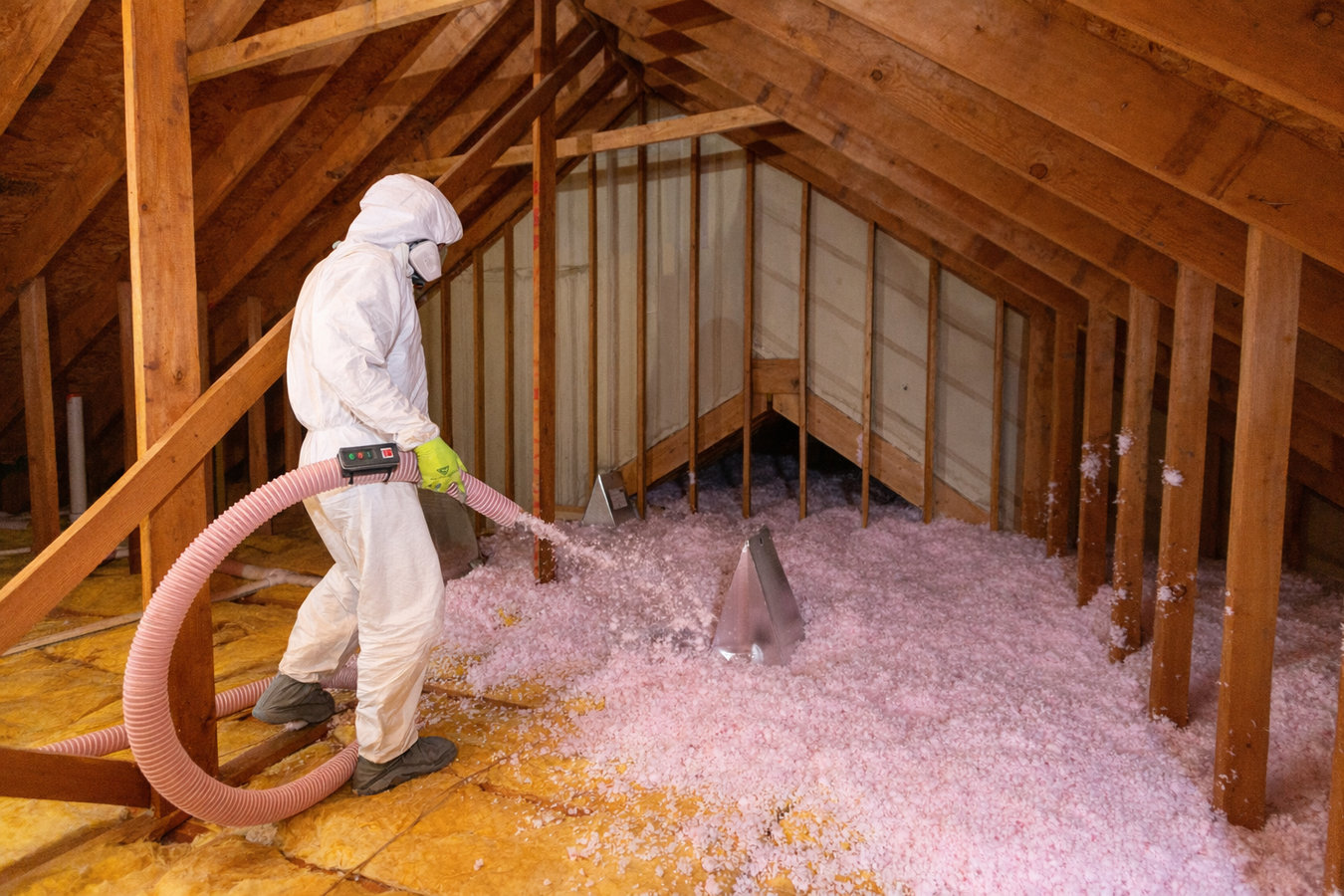
Blown-in insulation in St. Joseph is loose-fill cellulose or fiberglass that a contractor blows into your attic using a hose connected to a machine on their truck - most standard attic jobs are complete in two to four hours. The material fills gaps and irregular spaces that rigid batts can not reach, making it one of the best options for older homes where framing is uneven and decades of settling have created hard-to-reach voids. For Missouri, the Department of Energy recommends roughly 14 to 18 inches of blown-in material on your attic floor to reach the recommended insulation level for this climate, the same target depth any reputable blown in insulation job should hit.
If you have been dealing with high utility bills or rooms that never feel right in your St. Joseph home, your attic insulation is one of the first places to look. Blown-in material is especially well-suited to top-up jobs in homes where some insulation already exists but has settled or thinned over the years. For homeowners who want to address both heat loss and air infiltration in one visit, pairing blown-in insulation with our home insulation service gets your whole house assessed at once.
The U.S. Department of Energy recommends higher attic insulation levels for Missouri than for milder parts of the country - a reflection of how hard St. Joseph's temperature swings push every home's heating and cooling system year-round.
If your gas or electric bill has gone up noticeably over the past year or two but nothing else has changed, your attic insulation is one of the first places to check. In St. Joseph, where you are running either the furnace or the air conditioner for most of the year, a thin or degraded layer can add hundreds of dollars to your annual utility costs. This is especially common in homes built before 1980, which make up a large share of St. Joseph's housing stock.
If your upstairs bedrooms are noticeably warmer in summer or colder in winter than the rest of your home, heat is moving through your ceiling in ways it should not be. This is one of the most common complaints from homeowners in older St. Joseph neighborhoods where attic insulation has settled and thinned over decades. Blown-in material added directly above those rooms can make a dramatic difference.
If you peek into your attic with a flashlight and can clearly see the wooden beams running across the floor, your insulation level is almost certainly too low for St. Joseph's climate. Properly insulated attics in this region should have a layer so thick that the joists are completely buried and invisible. This is a quick visual check anyone can do from the attic hatch.
When heat escapes through an under-insulated attic, it warms the roof deck and melts snow from the inside out. That water runs down and refreezes at the cold eaves, forming ice dams. St. Joseph gets enough winter precipitation and freeze-thaw cycles that this is a real risk, and ice dams can force water under your shingles and cause serious damage to your roof and ceilings.
We install blown-in cellulose and fiberglass in attics, wall cavities, and hard-to-reach spaces throughout St. Joseph and the surrounding area. Every job starts with a measurement of what is already in your attic so we know exactly how much material is needed to reach the right depth - not just a rough guess. When air sealing is needed before the insulation goes in, we handle that as part of the same visit. Our home insulation service covers the full assessment if you want a look at your walls and crawl space in the same appointment.
For homeowners who need insulation removed before new material goes in - common in older St. Joseph homes where the original material has been damaged by pests or moisture - we coordinate that removal as part of the project. If your walls need attention in addition to the attic, our wall insulation service uses dense-pack blown-in techniques that reach into existing wall cavities through small holes, without tearing out drywall. The North American Insulation Manufacturers Association sets installation guidelines that we follow on every job to ensure consistent depth and coverage.
Best for homes with thin or settled attic insulation needing a top-up or full install.
Fills existing wall cavities through small holes without disturbing drywall.
Gaps around lights and pipes are sealed before new material goes in for better results.
Recycled-content material suited to attics where even coverage across irregular framing matters.
Moisture-resistant option for attics in homes with prior humidity or ventilation concerns.
Adds material on top of existing insulation to reach the recommended depth for this climate zone.
St. Joseph sits in a climate where summer highs regularly push into the mid-90s and winter lows can drop well below zero - sometimes in the same calendar year. That kind of swing puts constant stress on your home's ability to hold temperature, and under-insulated attics are one of the most common reasons heating and cooling bills spike in both directions. A large share of St. Joseph's residential neighborhoods feature homes built in the 1920s through 1960s, long before modern energy codes existed, and many of those homes have never had their attic insulation touched since the original build. The loose-fill nature of blown-in material makes it the most practical solution for the irregular framing and settled insulation that are common in homes of that era.
We work throughout the city and surrounding communities, including homeowners in St. Joseph, MO who are upgrading older homes and customers in Liberty, MO and nearby communities facing the same Missouri climate challenges. Missouri's humid summers also mean attic moisture is a real concern - blown-in fiberglass handles humid conditions well, and we assess ventilation before any material goes in to make sure the attic can breathe properly after the job is done.
We ask a few quick questions - your home's age, square footage, and what problems you have noticed. We respond within 1 business day and can typically schedule a free in-home estimate within a few days.
A contractor goes up into your attic, measures what is already there, and checks for moisture or ventilation issues before recommending anything. This step takes 20 to 30 minutes and is required before we quote - a contractor who skips it and prices over the phone is a red flag.
On job day, the crew lays down drop cloths near the attic access and handles any air sealing first - sealing gaps around light fixtures, plumbing, and other openings before any insulation is blown in. That prep work is what separates a thorough job from a quick one.
One installer works from inside the attic with the hose while the second runs the machine. When blowing is complete, the installer checks depth in multiple spots and leaves plastic depth markers in place so you can verify the coverage yourself anytime after the job.
Free estimate, no obligation. We measure your attic and give you a written quote before any work begins.
(816) 558-9711Every estimate starts with a contractor physically in your attic measuring what is already there. That number drives the quote - you are not paying for a guess. It also means we know whether air sealing prep is needed before the material goes in.
St. Joseph falls in a climate zone where the Department of Energy recommends 14 to 18 inches of blown-in material on your attic floor. We install to that benchmark on every job, not to a lower number that might get the job done faster. Depth markers are left in place so you can verify it yourself.
We serve St. Joseph and a 12-community area around it - no distant dispatch, no multi-week waits. Fall booking slots fill quickly in October as homeowners race the first freeze, but we respond to every inquiry within 1 business day and do our best to schedule within the week.
Every job comes with written documentation you can keep for your records. We also provide the product documentation you need to claim the federal energy efficiency tax credit when you file your taxes.
Every one of those points matters on its own, but together they mean you get an honest job done right the first time - no upselling on material you do not need, no thin spots near the eaves, and no scrambling to find paperwork when tax season arrives.
A full-house assessment covering your attic, walls, and crawl space to find where your home is losing the most heat or cool air.
Learn moreDense-pack blown-in technique fills existing wall cavities through small holes so you get better performance without tearing out drywall.
Learn moreFall booking slots fill fast in St. Joseph - call now or request online and we will respond within 1 business day.